
Pros and Cons of Solar Leasing in Virginia

Leasing solar panels in Virginia is one of the easiest ways for homeowners to lower their electric bills without paying tens of thousands of dollars upfront. With a lease through Dominion Energy Solutions, you pay a predictable monthly fee for clean energy while we handle design, installation, monitoring, and any necessary repairs for the life of the lease. This guide walks through the key advantages, tradeoffs, and most common questions about solar leasing in Virginia, so you can decide if it fits your home and budget.
What is a Solar Lease in Virginia?
A solar lease is a long-term agreement where a third party owns the solar equipment on your roof and you pay a fixed monthly payment to use the power it produces. With Dominion Energy Solutions:
- We design a custom system for your roof
- One of our vetted and certified installers puts the system on your roof
- You pay a set monthly lease payment, with no upfront cost
- We monitor performance, handle repairs (if any), and honor production guarantees for the full 25-year lease term
- You can drastically lower your overall energy costs
Pros of Solar Leasing in Virginia
No Upfront Cost
Buying solar in Virginia typically requires $15,000 to $60,000 upfront if you pay cash
Leasing replaces that large capital expense with a fixed monthly payment, making it an attractive avenue for many households to go solar sooner
This is especially attractive as federal tax rules change after 2025; homeowners who buy systems only receive the full 30 percent federal tax credit if the system is installed by the end of 2025, while third-party owned systems (including leases) have a longer runway to qualify and pass on savings to the lessee.
Predictable Energy Costs
Your monthly payments will be mapped out for the full life of the 25-year lease, making long-term budgeting simple.
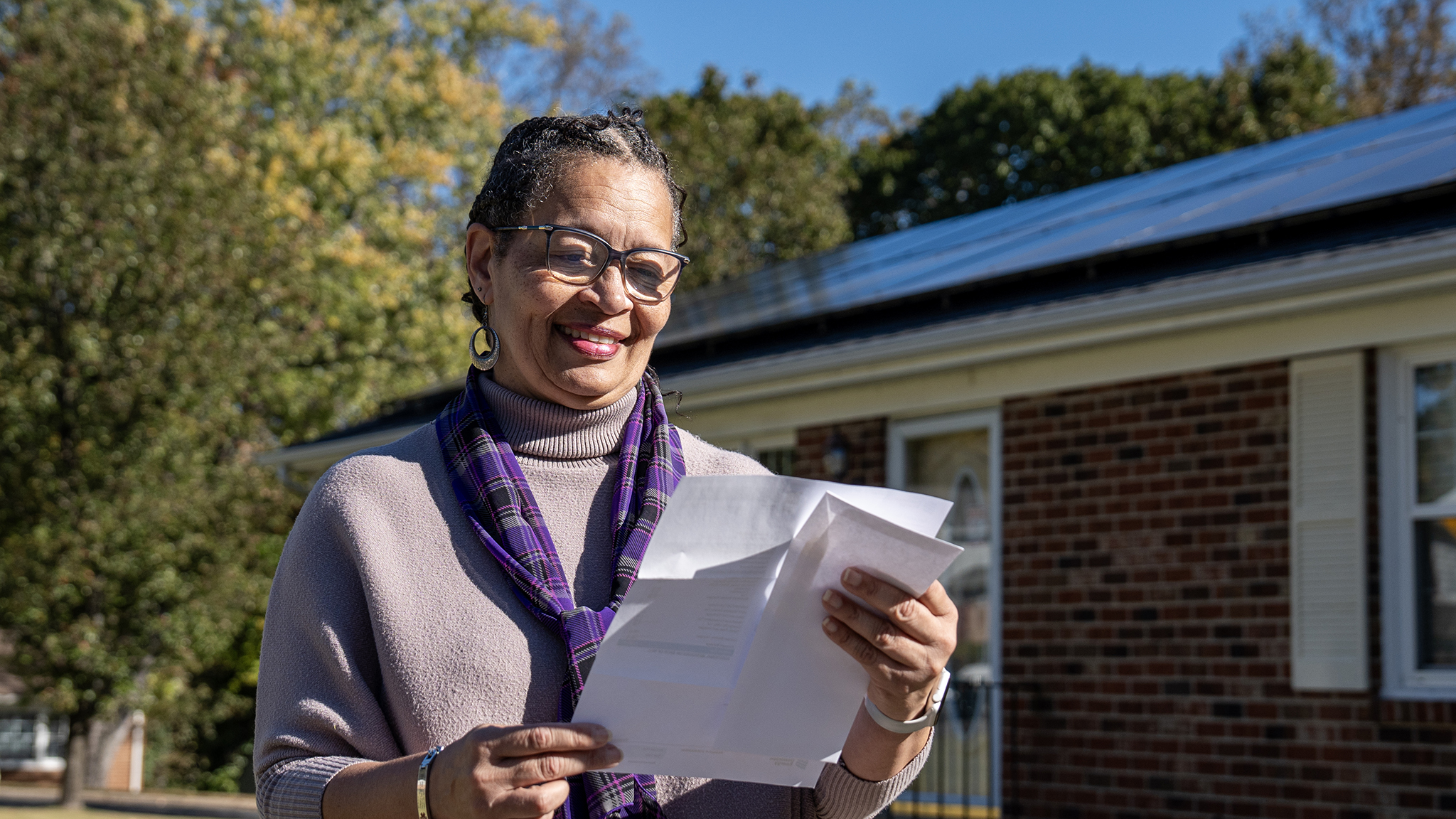
Your utility bill becomes a smaller “top-up” charge, since the solar system can offset close to or even slightly more than 100 percent of your annual electricity usage.
Maintenance and Repairs Included
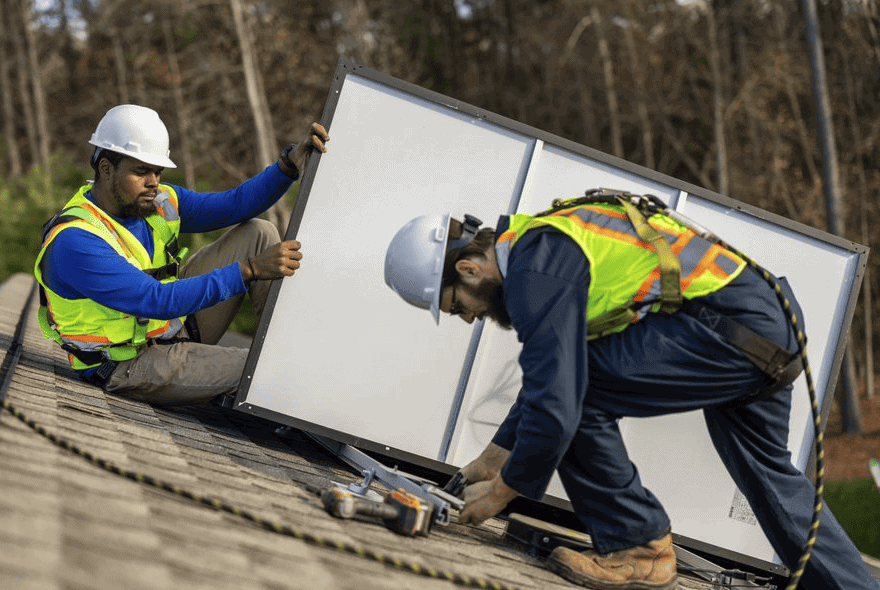
The lease is “all inclusive,” meaning your contract covers system repairs or services (if needed), and monitoring. Your only responsibility is the monthly lease payment.
A 10-year roof penetration warranty protects you from any damage caused by the solar installation.
Manufacturer and workmanship warranties extend to 25 years on the equipment and labor, matching the life of the lease.
Homeowners can rest easy knowing their systems are backed by the industry’s top warranties.
Production Guarantee and Guaranteed Savings Window
Lease customers receive a production guarantee that is reviewed every three years. If the system underperforms relative to its forecast, you’ll receive a check for the difference.
This shifts much of the risk from the homeowner to the leasing company.

Environmental Benefits Without the Capital Investment
Over the life of a typical system, you can offset dozens of tons of CO₂ and the equivalent of thousands of tree seedlings sequestering carbon for a decade.
Virginia ranks among the top states for solar capacity, so leasing helps you participate in the state’s clean energy transition without tying up your savings.
Easier for Some Buyers After the Federal Tax Credit Change
When the 30 percent federal tax credit ends for new owner-occupied systems after 2025, Virginians will no longer be able to use that incentive.
Leasing allows the third-party owner to monetize remaining commercial federal credits and incentives, then pass those benefits through in the form of lower monthly payments and guaranteed savings.
This can make leasing the simplest way to add solar to your home if you have less capital to afford a cash purchase.

Transfer When You Sell Your Home
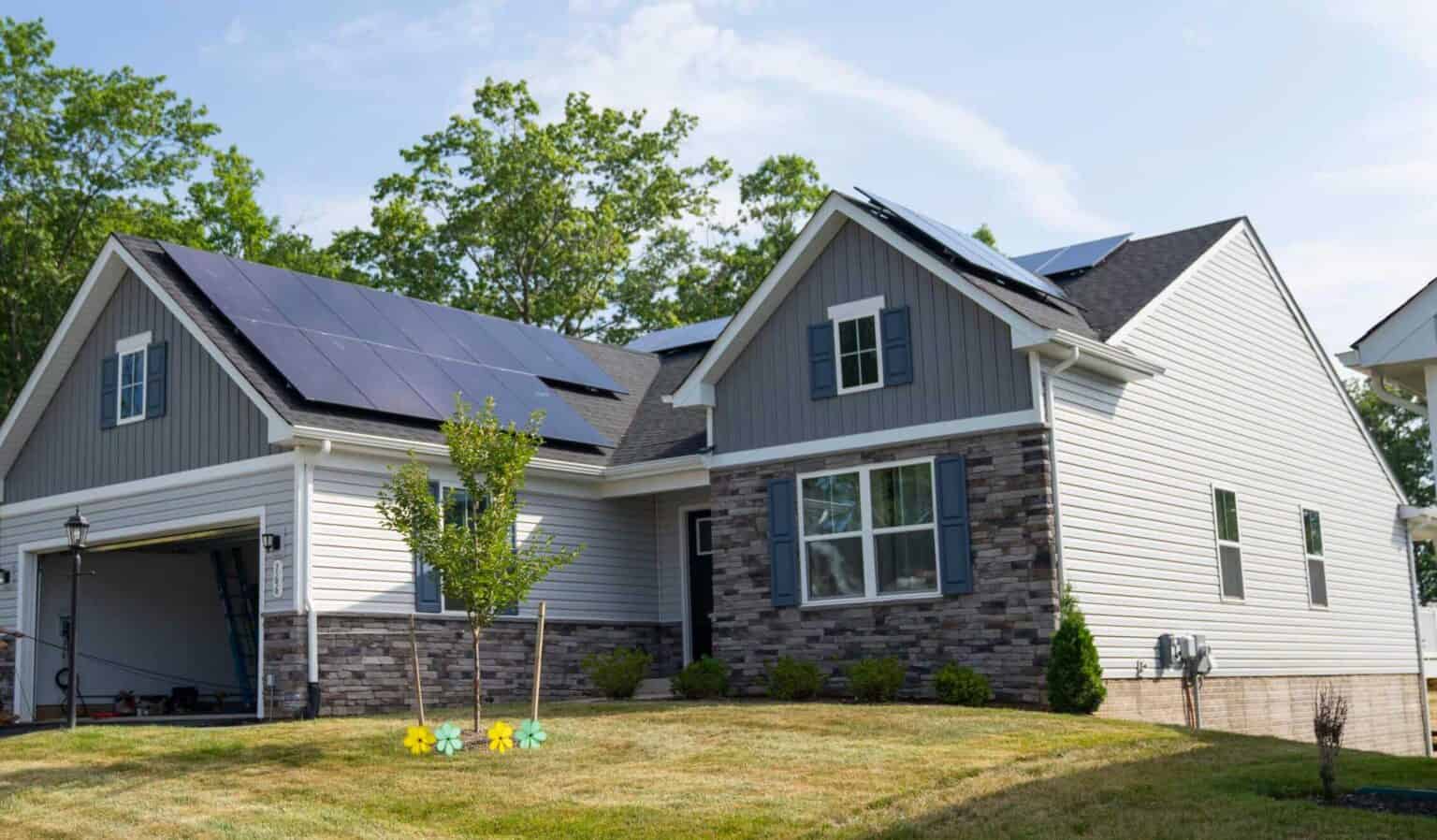
Solar leases are typically transferable to the next homeowner, subject to credit approval. The new owner steps into the lease and continues receiving power and bill savings. However, after 5 years of leasing you have the option to purchase your system at fair market value as determined by an independent appraiser.
In markets where buyers value low utility bills, this can be a selling point, especially when paired with documentation of production and savings.
Is Solar Right for your Home?
Get Free Solar Quote
Cons of Solar Leasing in Virginia


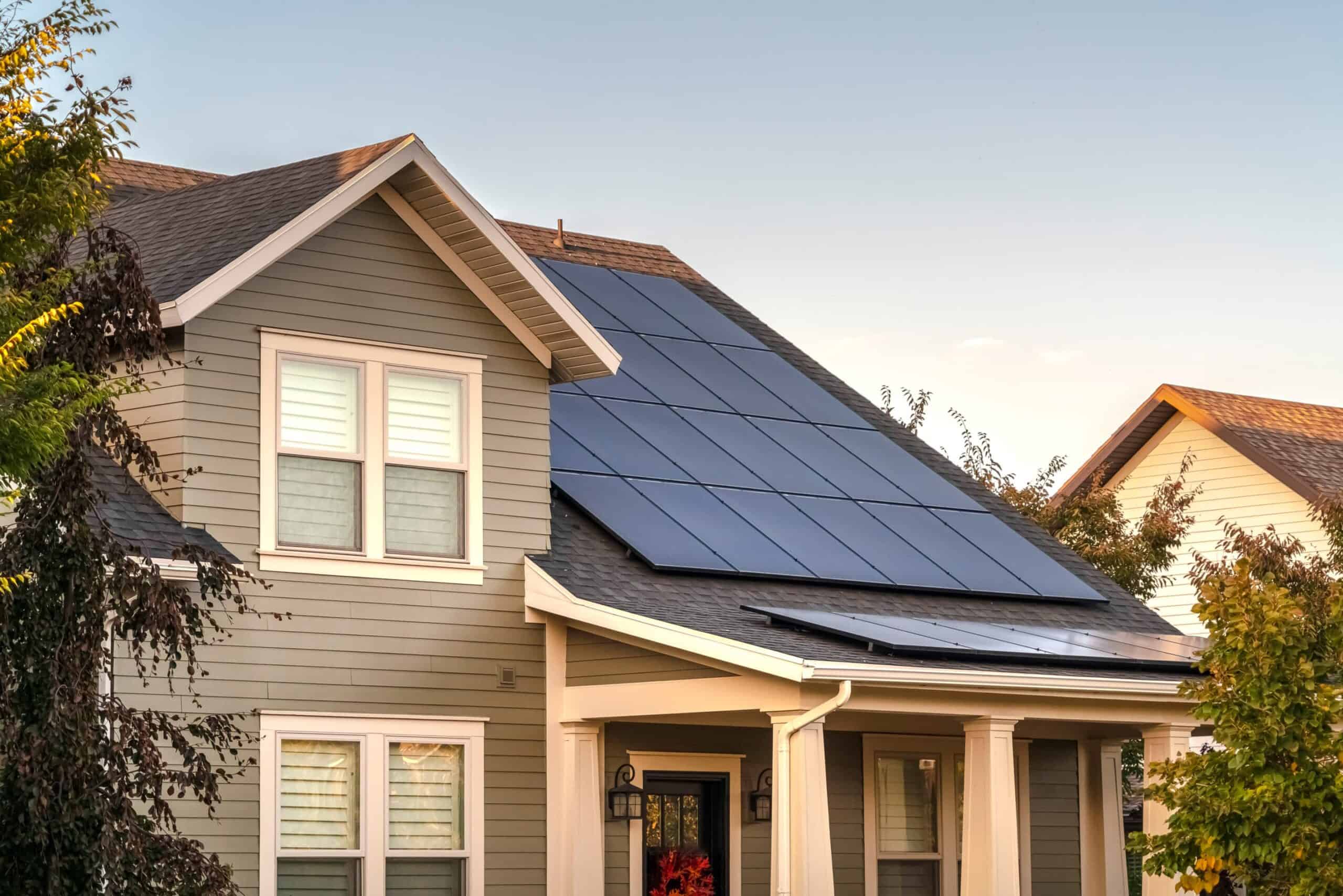
With a lease, a third party owns the panels. You are paying to use the power they generate, not to own the asset.
Because you don’t own the system, you don’t build equity in the equipment or have full control over future upgrades or modifications.
You have the option to purchase your system after leasing for five years at fair market value as determined by an independent appraiser.
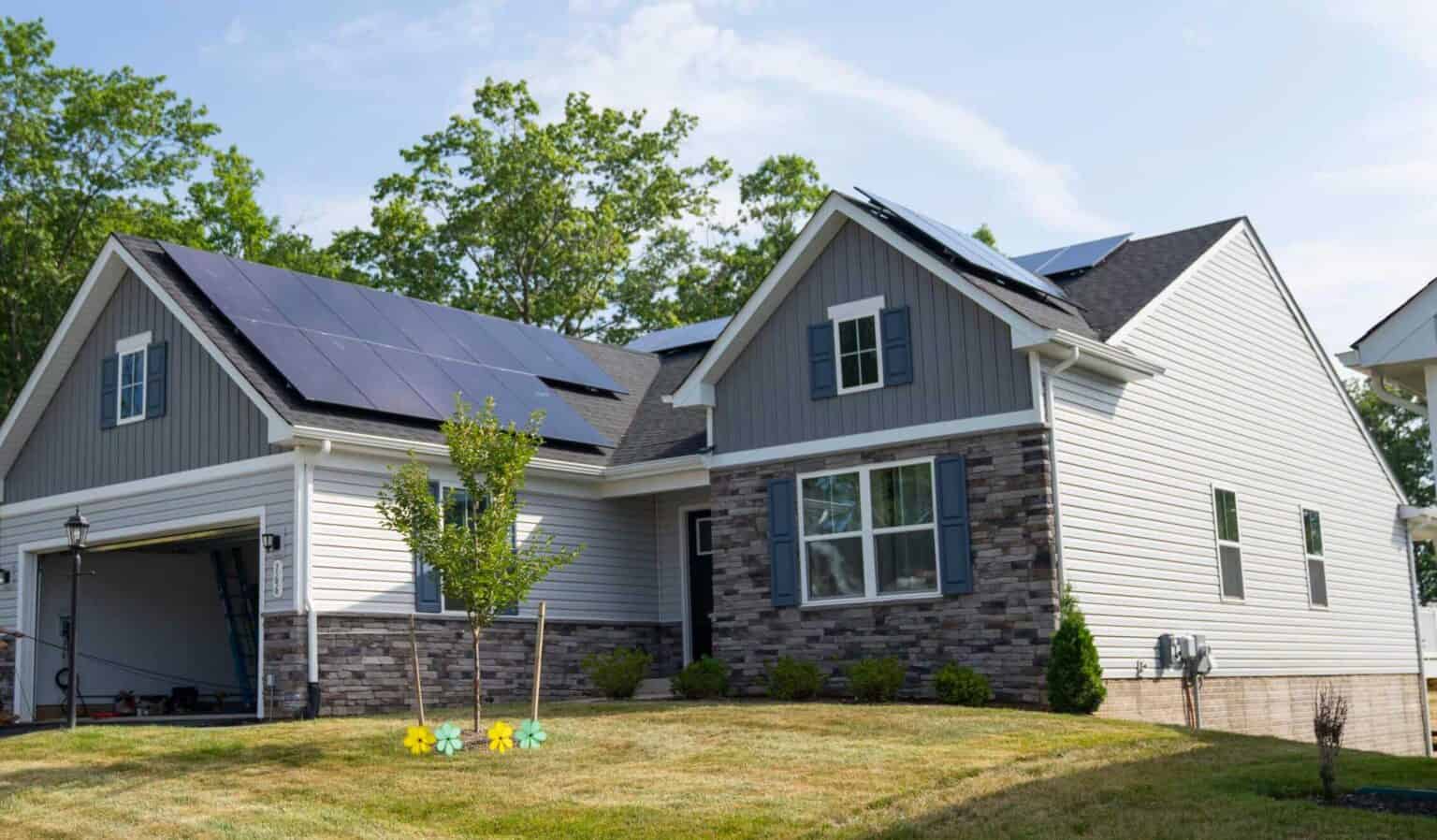
In Virginia, homeowners who buy and own their systems can participate directly in the SREC (Solar Renewable Energy Certificate) market, and may benefit from property tax exemptions where available. See our Virginia solar incentives page.
With a lease, the leasing company typically claims the federal tax credit and any associated ownership incentives, using them to structure the lease price. You receive savings through your monthly payment, not through SREC payments.
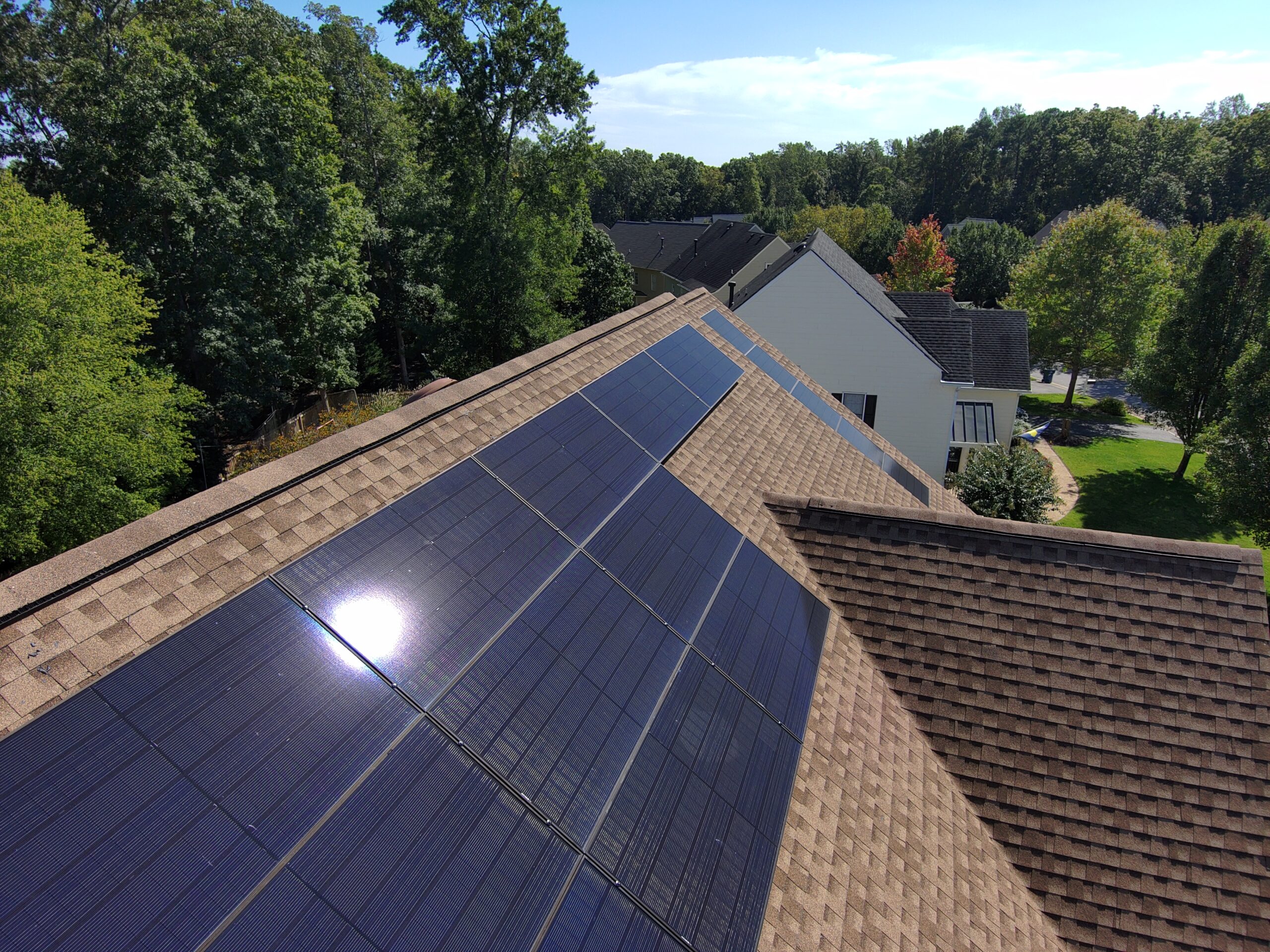
Example comparisons show that owning a system outright (cash or loan) can deliver approximately $20,000 to $50,000 in lifetime savings, while a lease often targets $5,000 to $30,000 in guaranteed savings, depending on rate assumptions.
Over 25+ years, you may pay more total through lease payments than you would have paid to buy the system and own all of the energy it generates.
For homeowners who can comfortably afford the upfront cost or qualify for favorable loans, owning typically wins on pure ROI.
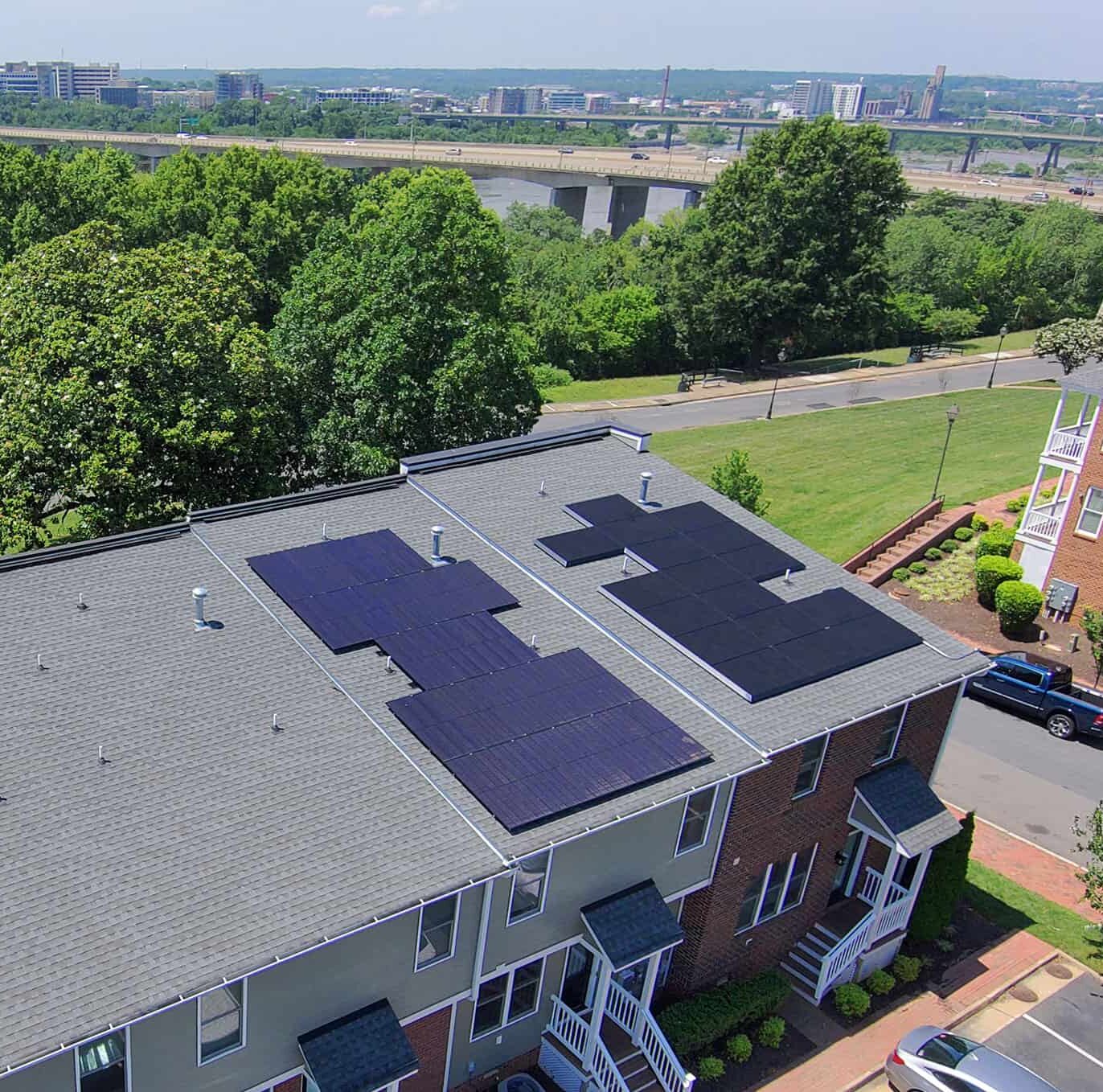
Solar leases run for 25 years. Ending the lease early may involve buyout provisions, transfer conditions, or other contractual requirements, which can add complexity if you plan to move soon.
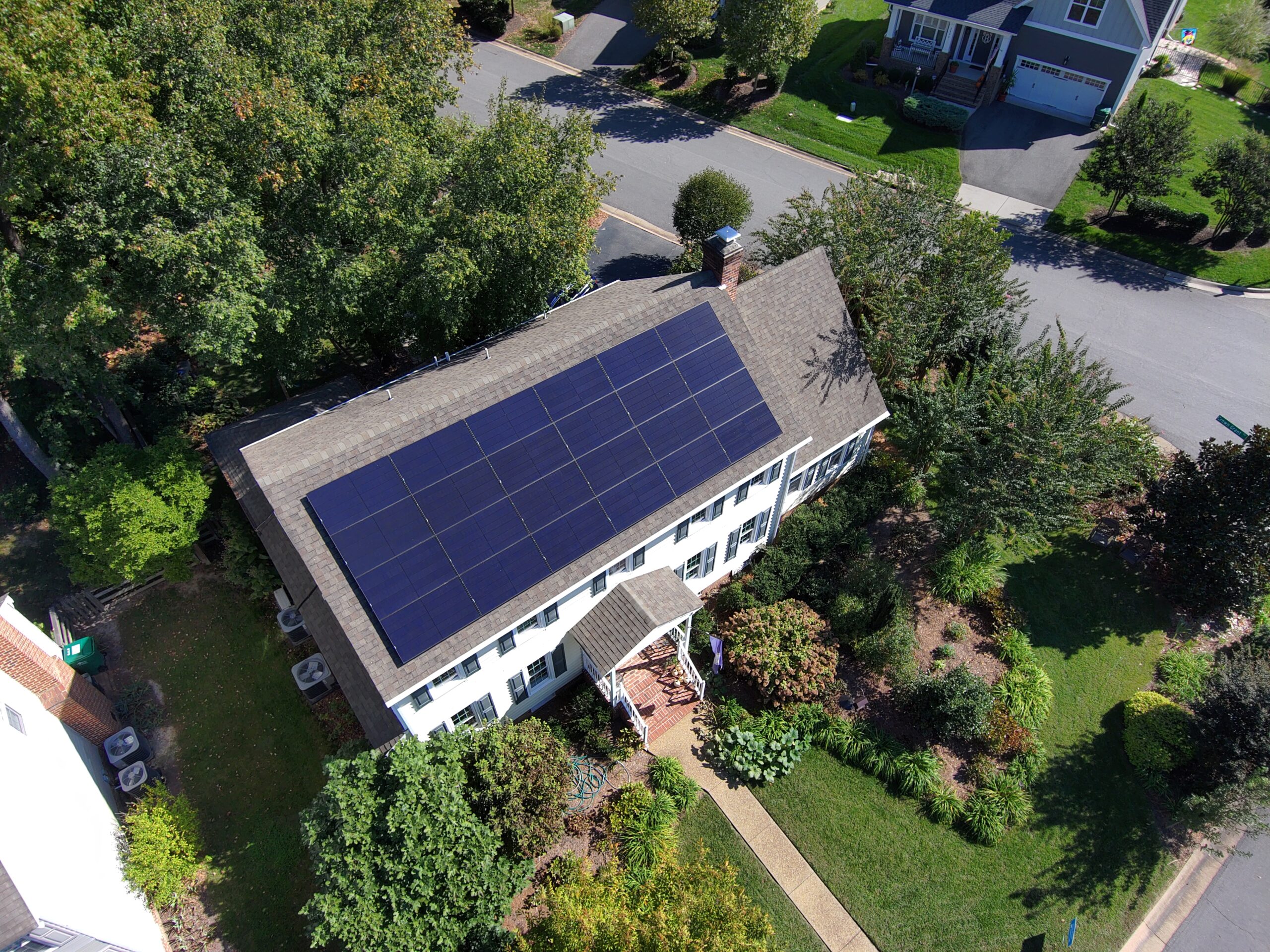
While leases can be transferred, not every buyer will be comfortable taking over a long-term energy contract, especially if they are unfamiliar with solar.
Clear documentation of savings and warranties helps address this, but it is still something to think through if you expect to sell in the next few years.
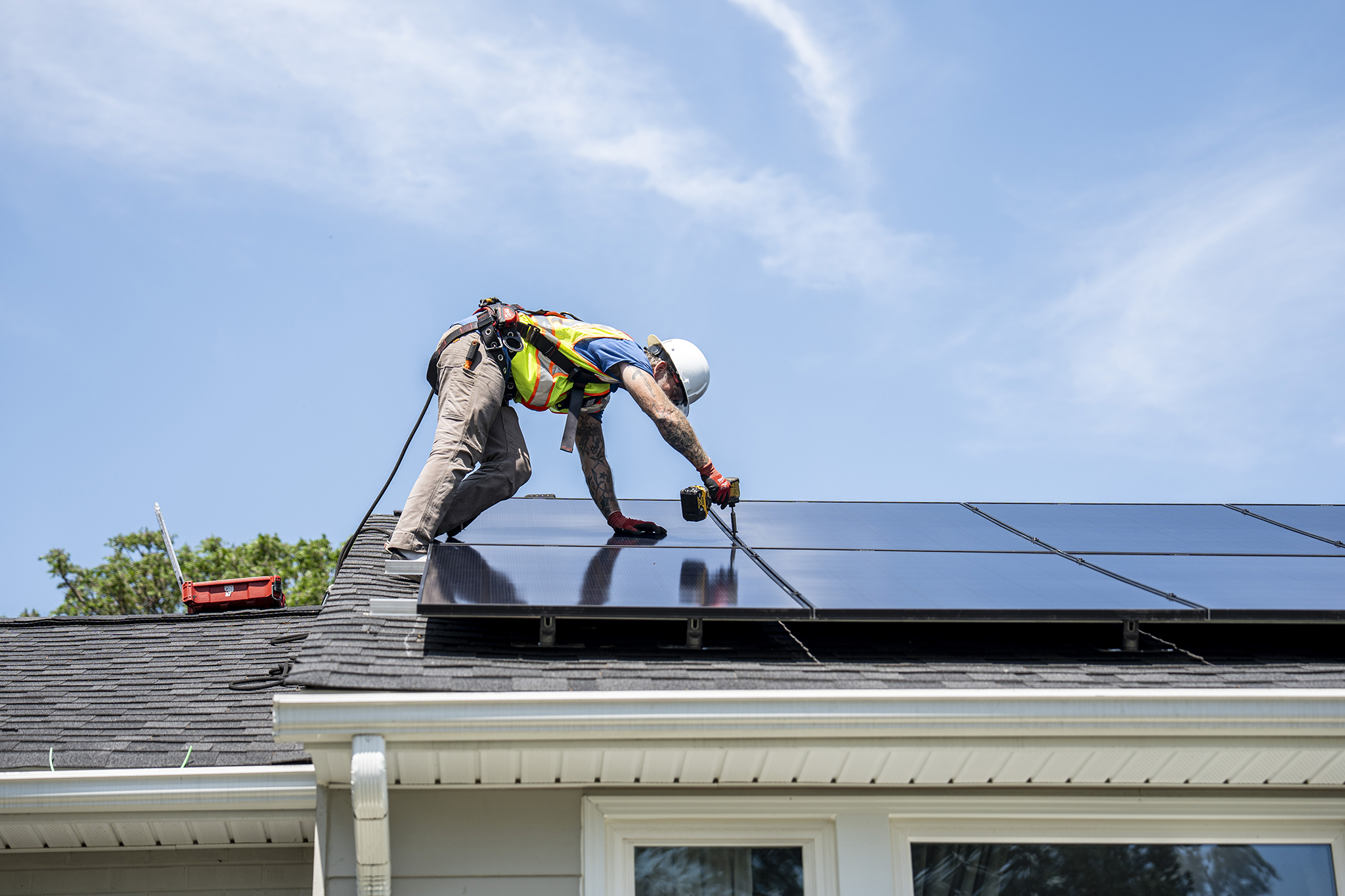
Because you don’t own the equipment, adding panels, changing inverters, or pairing with future storage may require approval from the leasing company and may not always be possible within the original contract.
Real World Case Study
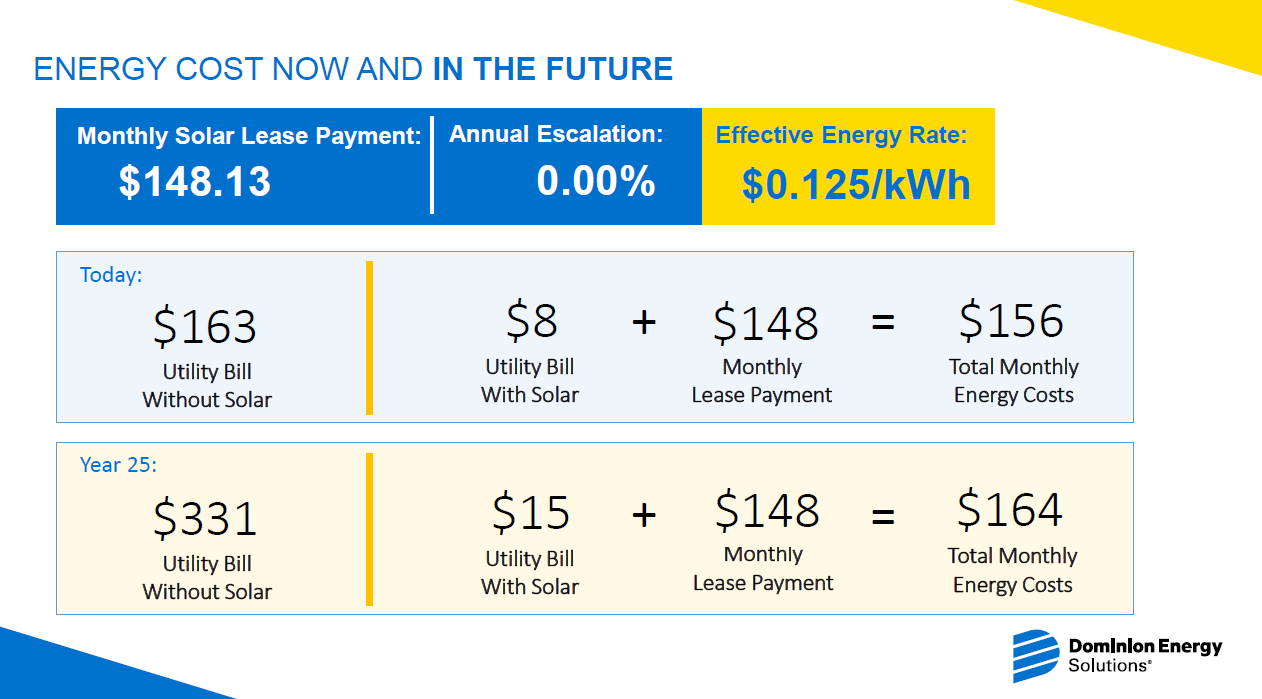
Example from a 11 kW system in Dominion Energy Virginia’s territory:
The customer’s pre-solar bill was about $163 per month. With solar, the remaining utility bill plus the lease payment totals about $156 in year one, and only about $164 in year 25, with a 0% annual escalator, compared to a projected $331 utility bill without solar, assuming 3% annual utility rate escalation.
Dominion Energy Solutions Solar Leasing FAQ (Virginia-Specific)
Is leasing solar in Virginia worth it?
Leasing can be worth it if you want lower electric bills, no upfront costs, and don’t care about owning the equipment. A leased system can offset close to your full annual usage, if not fully cover your usage, and deliver tens of thousands of dollars in projected savings over 25 years, with maintenance and performance guaranteed.
If your priority is maximum lifetime ROI, buying the system often yields higher total savings.
How does a Dominion Energy Solutions solar lease work?
Dominion Energy Solutions designs, engineers, and installs a system tailored to your roof using high-efficiency panels and microinverters. You pay a monthly lease fee for 25 years, while system monitoring, any needed repairs, and 25 years of guaranteed production is covered by the leasing company.
What happens to my electric bill with a lease?
You still have a utility bill, but it’s smaller because your rooftop system supplies most of your energy. In one Virginia example, the bill without solar is about $163 per month. With solar, the remaining utility bill plus the fixed lease payment totals around $156 in year one and about $164 in year 25, compared to a projected $331 utility bill if you never installed solar.
Do I still get the 30 percent federal tax credit with a lease?
With a lease, the system owner typically claims any remaining federal tax credits and passes the savings on to homeowners. For new homeowner-owned systems in Virginia, the 30 percent residential credit is scheduled to end for installations placed in service after 2025, while commercial-style structures such as leases may continue to qualify under separate rules for projects that start construction within specific timelines.
Those incentives are used to structure competitive lease payments and guaranteed savings. You receive the benefit as stable, lower energy costs rather than as a tax refund.
Who takes care of maintenance and repairs?
The Leasor handles monitoring, troubleshooting, and any needed system repairs under the lease. Panels come with 25-year manufacturer warranties; the labor and installation are backed by the 25-year workmanship warranties, and there is a 10-year roof penetration warranty that covers roof damage caused by the solar installation.
What if my system doesn’t produce as much power as expected?
Your lease includes a production guarantee for the 25-year life of the contract. If the system generates less than 90% of the estimated amount, you will receive a check or bill credit for the difference, based on the value of the lost energy. The production is reviewed every three years.
Can I add a battery or EV charger later?
In many cases, you can layer additional services like EV charging or battery storage onto your home, but any change that touches the leased solar system must be coordinated with Dominion Energy Solutions to maintain warranties, production guarantees, and safety. Your Energy Advisor can walk through options for batteries or future upgrades as part of your design consultation.
How long does it take to install and activate a leased system?
From signed agreement to system activation, most Virginia projects take about 8 to 12 weeks, depending on permitting timelines and utility approvals. The process includes design, engineering, HOA approvals if needed, local permits, installation, inspections, and final utility interconnection.
What happens if I sell my home during the lease?
Most solar leases allow you to transfer the contract to the new homeowner, subject to credit approval. You work with the lessor to provide the buyer with production data, payment terms, and transfer documents. Because the system stays on the home, the buyer continues receiving lower electric bills as long as they assume the lease. After 5 years of leasing, you have the option to purchase your system.
Is my home right for a Dominion Energy Solutions solar lease?
Good candidates:
- Single-family homes in Virginia
- Roofs with decent sun exposure and minimal shading
- Electric bills high enough that solar can offset a meaningful portion of usage (often 500+ kWh per month)
Your Dominion Energy Solutions Energy Advisors will evaluate your roof, shading, and energy usage to confirm whether a lease makes financial sense.
How is leasing different from a power purchase agreement (PPA)?
Both leases and PPAs are third-party ownership models. With a lease, you pay a fixed monthly amount for the use of the system. With a PPA, you pay per kWh for the energy generated.
How does net metering work with a leased system in Dominion Energy’s territory?
Dominion Energy’s net metering program credits you for excess solar power sent back to the grid at the same rate you pay for electricity. Over a billing period, you’re charged only for your net usage, and credits can carry forward. The fact that your system is leased doesn’t change how net metering works on your bill.
Compare Payment Options
| Key Feature | Cash Purchase | Solar Loan | Solar Lease |
| Who Owns the System | You | You (after loan payoff) | Third-party |
| Upfront Cost | Highest – typically $15,00-$60,000 | Low to moderate (down payment optional) | No upfront cost |
| Monthly Payment | None after installation | Loan payment for 25 years | Fixed lease payment for 25 years |
| Electric Bill Impact | Utility bill drops significantly; you pay only basic charges and any remaining usage | Utility bill drops; loan + new utility often similar to or below your old bill | Utility bill drops; you pay a smaller utility bill plus the lease payment |
| Other Ownership Incentives | You can receive any available SRECs or property tax benefits | Same as cash (you are the owner) | Ownership incentives go to the system owner, not you |
| Maintenance & Repairs | Your responsibility after equipment and labor 25-year warranties expire | Your responsibility after equipment and labor 25-year warranties expire | Lessor covers system repairs, service, and monitoring under the 25-year lease |
| Roof Penetration Warranty | 10-year roof penetration warranty for damage caused by the solar installation | 10-year roof penetration warranty for damage caused by the solar installation | 10-year roof penetration warranty for damage caused by the solar installation |
| Production Guarantee | 1-year production guarantee | 1-year production guarantee | 25-year production guarantee on the leased system |
| Typical Lifetime Savings (25 Years) | Highest – often around $20,000–$50,000+ depending on usage and rates | High – slightly less than cash due to loan interest | Moderate but guaranteed – often around $5,000–$30,000 in projected savings |
| Impact on Home Value | System is a fixture that can increase home value | Same as cash once the loan is paid or assumed | Lease can typically be transferred to a new buyer, subject to credit approval |
| What You’re Really Buying | Maximum long-term ROI and full control | Balanced savings with manageable monthly payments | Predictable energy costs and a hands-off experience |
| Best Fit For… | Homeowners with savings and a long time horizon | Homeowners who want to own with low upfront cost | Homeowners who want $0 down and minimal responsibility |